Curiosity 9 of 10
9. Yawning is contagious, and it starts before birth
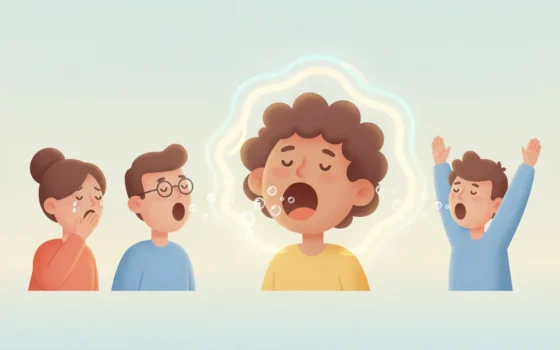
Seeing someone yawn, hearing a yawn, or even reading about the subject can make you yawn too. And yawning starts early: babies already yawn inside the mother's belly.
A reflex that jumps from person to person
A yawn is a long opening of the mouth, with a deep inhalation and a shorter exhalation, lasting a few seconds. It appears in many animals with a backbone, from fish to mammals.
The contagious side is more limited. It is well documented in people and has also been observed in chimpanzees and dogs, which may yawn when they see their owner yawning. In humans, contagion tends to be stronger among close people, such as family and friends.
Why we yawn is still debated. The popular idea that it is due to lack of oxygen has not been confirmed in tests. One of the most studied hypotheses is that yawning helps cool the brain, and another links it to changes in state, such as waking up or becoming sleepy.
Ultrasound exams show yawns in the fetus from the end of the first trimester. Contagious yawning, however, only appears later, in childhood, together with the ability to pay attention to others.
Yawning also affects the ear. The wide opening of the mouth moves muscles linked to the Eustachian tube, the canal that connects the ear to the throat, and helps equalize pressure, as happens when a plane descends.
Did you know? A human yawn lasts on average about 6 seconds. A study comparing several mammal species found longer yawns in species with larger brains.