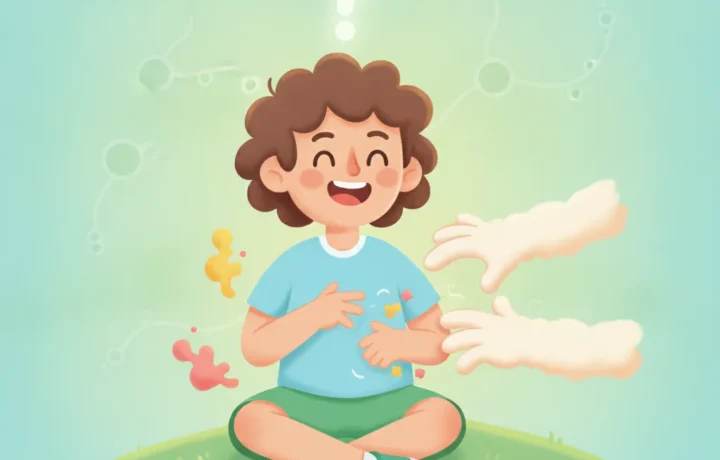
We feel tickled because our body reacts to unexpected stimuli, especially when someone touches certain sensitive parts of our skin. However, it is very difficult to provoke the same sensation in ourselves because the brain predicts our own movements and thus removes the surprise involved. Therefore, tickling depends on the combination between an unexpected touch and the way our nervous system interprets that contact.
Body points and responses to tickling
The areas most sensitive to tickling are usually those that are protected or vulnerable, such as the armpits, ribs, soles of the feet and neck. These areas have a high concentration of nerve endings, which means that small touches or vibrations trigger quick and very noticeable reactions.
Different people may feel tickling in different ways. Some are extremely sensitive, while others barely react at all. Factors such as tension, relaxation or the social context itself influence the intensity of the response.
Tickling usually provokes involuntary laughter and a reflex to defend oneself or squirm. This behavior can be seen even in young children and in some animals, indicating that there is an instinctive aspect to this type of reaction.
The relationship between surprise and tickling
When someone tickles us, we do not know exactly when the touch will come or what the movement will be. This lack of predictability activates brain regions linked to attention and defense, keeping the nervous system on alert.
The element of surprise is so important that if someone warns in advance where they are going to touch, the person's chance of feeling less tickling increases considerably. This shows that knowing what is going to happen directly affects the intensity of the reaction.
This mechanism serves as protection, helping the body quickly perceive unknown touches. This rapid response has evolutionary roots, helping to defend against possible threats in the more fragile parts of the body.
Why the brain blocks self-induced tickling
When we try to tickle ourselves, the brain prepares the muscles, calculates the touch and predicts exactly the sensation that is about to come. Thus, the surprise factor disappears and, without it, the stimulus does not trigger the typical tickling response.
This automatic blocking happens because the brain receives anticipated information from its own movements, comparing what is expected with what is real. If everything matches, the sensation is ignored, like a kind of "filter" of the central nervous system.
This control happens mainly in the cerebellum, a brain region linked to coordination and the prediction of movements. This is why touching our sensitive areas normally does not produce the same funny, involuntary effect as tickling done by another person.
Examples of situations involving tickling
Simple everyday gestures show the connection of tickling with surprise and social interaction. Families often play at tickling children, provoking laughter and moments of relaxation between parents and children.
During play, it is common to see children squirming and laughing out loud when touched on the feet or ribs. Adults, on the other hand, are usually less sensitive, but they can still react intensely in unguarded situations.
- Childhood games with tickling wars between siblings.
- Curious tests where someone tries to lightly touch themselves to see if they feel tickled.
- Moments at parties when friends tickle each other by surprise.
- Immediate reaction of raising the shoulders when someone threatens to touch the neck.
What science still investigates about tickling
Although much is known, it is still not known exactly why tickling provokes laughter in some people and not in others, nor why some areas of the body are so sensitive while others react hardly at all to the same stimulus.
There are hypotheses that factors such as personality, personal history and even social context may influence the intensity of the experience. It is also debated whether all tickling has a social function, of bonding, or whether it would only be a by-product of the evolution of defensive touch.
There are still doubts about the relationship between tickling, empathy and the role of the brain in the difference between feeling and not feeling, depending on the expectation created before the touch.
Step by step: from touch to laughter
- Someone unexpectedly touches a sensitive region of the body.
- The nerve endings send signals to the central nervous system.
- The brain recognizes the unpredictability of the touch and activates alert centers.
- The body reacts with spasms, laughter or automatic movements to avoid the stimulus.
- When the touch is predicted, as in a self-induced attempt, the brain blocks the sensations associated with tickling.
- This prevents the person from feeling the same involuntary laughter that occurs when another person tickles them.
Frequently asked questions
Is there any animal besides humans that feels tickled?
Yes, some animals can also react to tickling, mainly mammals such as rats and primates. They usually show similar behaviors, such as squirming or making sounds, but the form and motivation may be different from those of humans.
Why are some people more sensitive to tickling than others?
Sensitivity varies from person to person because of genetic factors, life experiences and even the mood of the moment. Levels of tension, relaxation or the degree of trust in the situation can also influence how much each person feels tickled.
Is it possible to train the body not to feel tickled?
Although some people become less sensitive over time, there is no proven technique that completely eliminates the sensation for everyone. The brain can get used to certain repeated stimuli, but most people maintain some response to unexpected touch.
Can tickling have any usefulness in everyday life?
Yes, tickling has already been associated with social bonds and communication, especially between parents and children. It may also serve as a form of defense, helping the body quickly detect unexpected touches in vulnerable regions.
Summary: the role of the brain in tickling
Tickling shows how our brain distinguishes predictable stimuli from unexpected ones. By predicting our own movements, it turns off the startle reaction, making the laughter caused by tickling a mainly social and involuntary phenomenon.
Understanding tickling reveals a lot about how the nervous system works and about the importance of human interaction in producing this kind of sensation. The element of surprise is the secret, and the brain is what takes away the fun when we try to tickle ourselves.