Curiosity 3 of 10
3. Days are getting longer
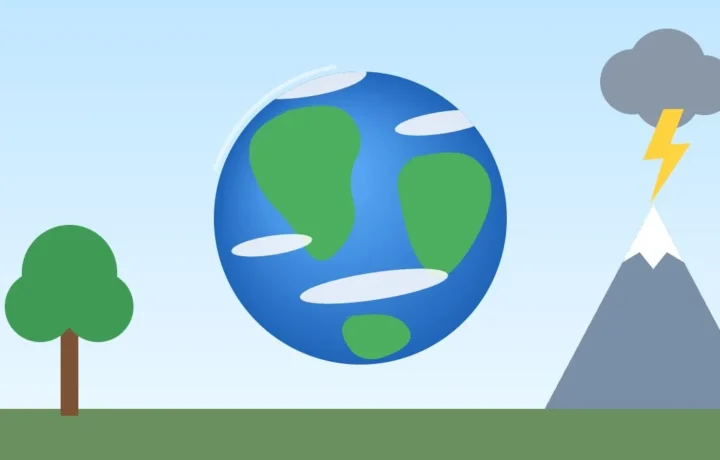
Earth's rotation is slowing down very gradually, because of the Moon. The day gets about 2 thousandths of a second longer every century, and in the age of the dinosaurs it was less than 24 hours.
The Moon acts as a brake
The Moon's gravity pulls on the oceans and creates the tides. Because Earth spins faster than the Moon orbits it, this bulge of water sits slightly ahead and acts as a brake, stealing energy from the planet's rotation.
The effect is tiny in everyday life: between 1.7 and 2.3 thousandths of a second more per century, according to different studies. But over millions of years, it makes a difference. Research on the shell of a fossil mollusk indicated that about 70 million years ago, the day lasted close to 23 and a half hours.
The energy Earth loses goes to the Moon, which moves away from us by about 3.8 centimeters per year. This is measured with lasers aimed at mirrors that the Apollo mission astronauts left on the lunar surface.
In the short term, the rotation also varies for other reasons, such as melting ice, winds, and the movement of the planet's core. That is why the reference atomic clocks have already had to receive extra seconds to keep up with the Earth.
Did you know? A major earthquake can change the length of the day. According to NASA calculations, the 2011 earthquake in Japan shortened the day by about 1.8 millionths of a second, by redistributing mass across the planet.