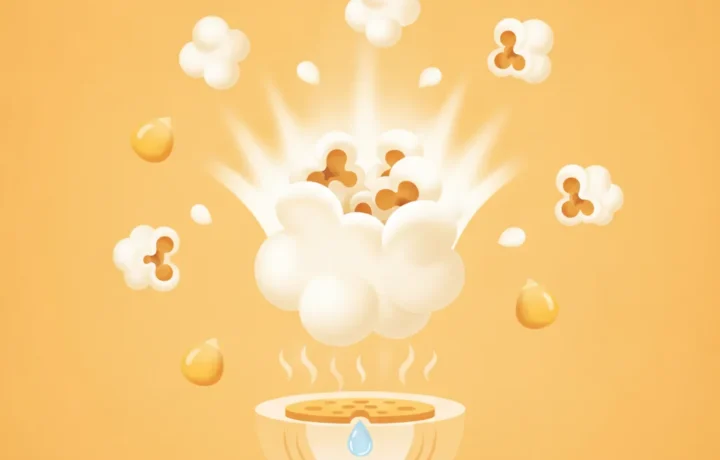
Popcorn pops because of the physical process caused by the combination of the starch inside the kernel and the water trapped within it. When the corn is heated, the water turns into steam and increases the internal pressure until the hull can no longer withstand it and bursts, releasing the expanded starch. In general, it is this rapid transformation of water into steam, together with the resistance of the hull, that makes the magic happen.
The water that lives inside the popcorn kernel
Inside each popcorn kernel there is a small amount of water. This water is trapped in the starch inside the kernel, surrounded by a firm, hard hull. Without this water, the kernel could not pop and would only burn when heated. That is why overly dry corn does not produce good popcorn.
When the popcorn starts to heat up, this water turns into steam inside the kernel. Steam takes up more space than liquid water, greatly increasing the internal pressure of the corn. The resistant hull prevents this steam from escaping, at least for a while.
The moment the pressure inside the kernel reaches the limit of the hull's resistance, it cracks abruptly. At that instant, the released steam blasts the heated starch outward, resulting in the expansion of the popcorn we know.
How pressure turns corn into popcorn
The secret lies in the hull of the popcorn kernel, which is special: it is strong enough to hold the high steam pressure for a few moments. Not every corn can become popcorn; it must be the right type with this characteristic.
This "controlled explosion" occurs when the water inside the corn turns into steam and cannot easily escape, building up pressure. The starch, under high temperature and pressure, becomes pasty and, when the hull bursts, it expands and cools quickly, forming the fluffy texture of popcorn.
- The water inside the kernel turns into steam when heated.
- The steam pressure grows because it cannot escape the resistant hull.
- The internal starch softens and becomes elastic, ready to expand.
- When the pressure overcomes the strength of the hull, it bursts and releases the contents.
- The expanded starch cools and hardens, forming the popcorn we know.
Everyday examples of popcorn popping
Have you noticed how some kernels jump higher when they pop? This happens because of the force accumulated by the steam within the hull. At home, whether in a pot or in the microwave, the principle is the same: the heat turns the water into steam and, right after the pop, the popcorn swells.
When we prepare popcorn on the stove, usually some kernels do not pop. They stay hard and small, called "old maids". This happens because these kernels generally have little water or a damaged hull, so they do not build up enough pressure to explode.
Besides that, you can notice the difference when using corn that has been stored properly and corn that is older. Older corn usually pops less, producing more "old maids", precisely because it loses water during storage.
Why some kernels never pop
Not every popcorn kernel pops when heated, and there are reasons for this. One of the main ones is an insufficient amount of water inside the kernel. If the corn has lost moisture over time or was stored improperly, it may never pop, no matter how much it is heated.
Another important factor is the integrity of the hull. If the kernel's hull is cracked, split or damaged, the steam escapes before reaching the pressure needed to make the kernel pop completely, leaving the kernel hard and small.
In addition, even natural variations in the corn itself can have an influence. Some kernels end up developing defects or differences that prevent them from building enough pressure, producing that small percentage of kernels that never become popcorn.
What is still not fully understood about popcorn
Although we know well the ingredients needed for popcorn to pop, there are aspects of the kernels' microstructure that are still under analysis. The details of how different types of starch and variations in the hull affect the process are still debated among specialists.
There are hypotheses about factors that could improve kernel yield, such as the exact texture of the hull or small amounts of substances responsible for the flavor and tenderness of popcorn, but there is still no full consensus on all the influences.
Another area of study is how to store corn to better preserve the water content inside the kernel. Small differences can have a large impact on the popcorn result, and the ideal methods for always guaranteeing a perfect pop are still being refined.
Frequently asked questions
Is it possible to rehydrate old popcorn kernels and make them pop?
Yes, if the kernel's hull is not damaged, it is possible to try rehydrating it by leaving it in a humid environment for a few hours. This may increase the chance of popping, but it does not guarantee a perfect result. Kernels that have lost a lot of water or have structural defects may not react well to the process.
Why does microwave popcorn seem different from popcorn made in a pot?
The heating method influences the pop and the texture of the popcorn. In the microwave, heating is more even and fast, while in a pot there is direct contact with the oil, slightly changing the flavor and color. Both use the same physical reaction of pressure and steam, but the result can vary.
What is the best way to store popcorn corn to ensure it pops?
Ideally, keep the kernels in a cool, dry place, away from excessive heat. Tightly closed packaging helps prevent moisture loss. If exposed to air for a long time, the kernels dry out and may not pop as well as freshly bought ones.
Does popcorn made without oil also pop?
Yes, oil is not necessary for popcorn to pop. It serves to transfer heat more evenly in the pot and to add flavor to the popcorn. What matters for popping is the combination of internal water and the resistance of the corn's hull.
How the secret of popping still fascinates people today
The popping of popcorn is a physics spectacle happening in anyone's kitchen. The simple fact that a tiny kernel transforms so dramatically is a fun reminder of how small amounts of water and a tough shell can cause big reactions.
Even knowing many details of the process, the charm of seeing and hearing popcorn pop is still appreciated. Discovering how it all happens only adds to the fun when preparing that snack for the movie or to share with friends.